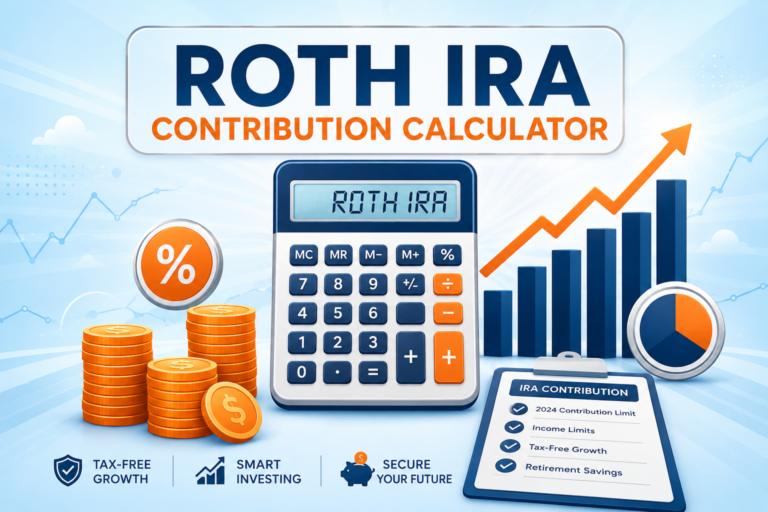
Not sure whether a Roth IRA or a Traditional IRA fits your situation better? Enter your age, income, and tax rate below to see which account could leave you with more retirement money.
Tool here
A Roth IRA taxes your money now, so it’s tax-free later. A Traditional IRA does the opposite. Which one wins depends on your income today versus your expected income in retirement.
What is the main difference between a Roth IRA and a Traditional IRA?
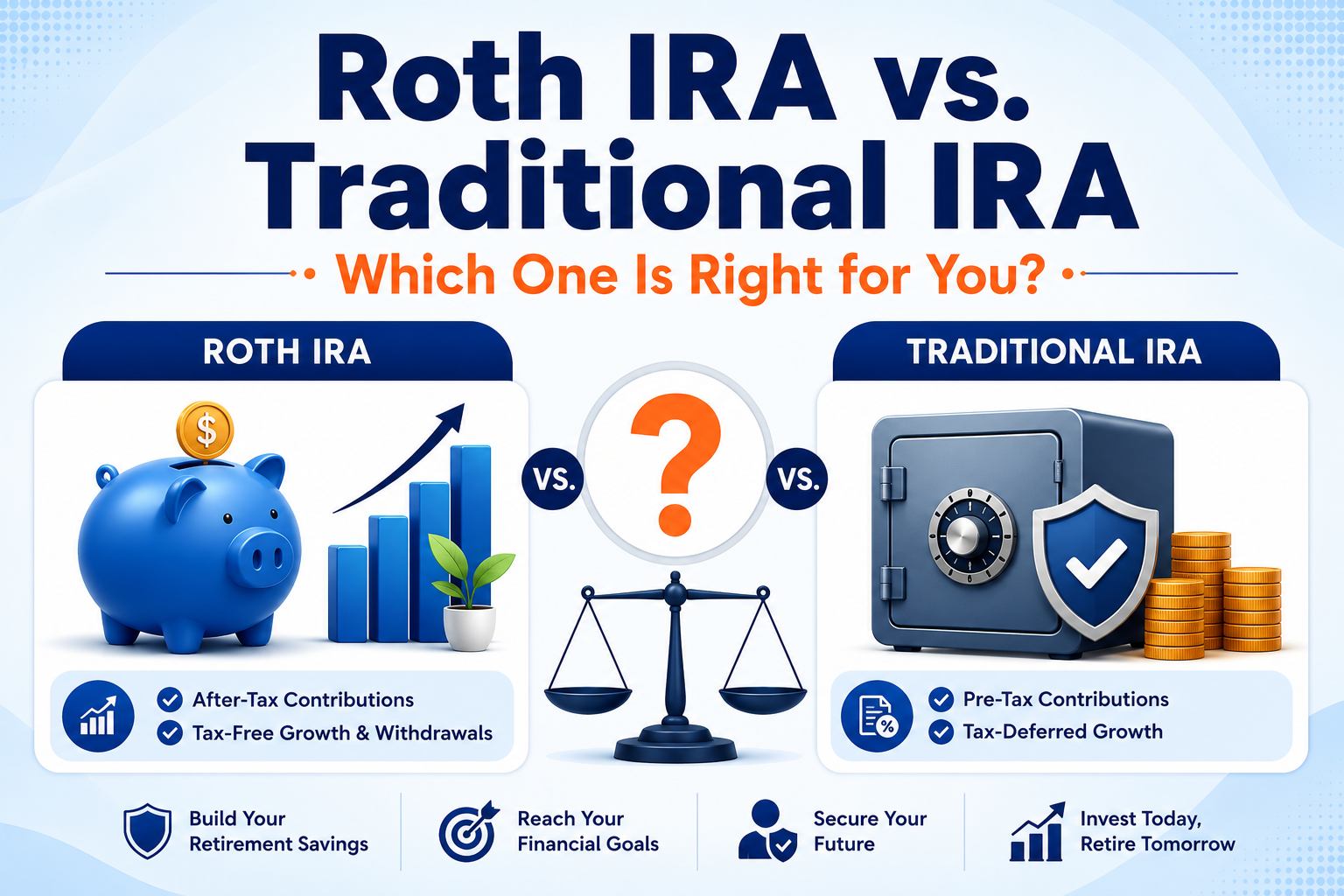
The main difference between a Roth IRA and a Traditional IRA is when you pay taxes. A Roth IRA is funded with after-tax money, so you get no tax break today, but your withdrawals in retirement are completely tax-free. A Traditional IRA is funded with pre-tax (or tax-deductible) money, which lowers your tax bill today, but your withdrawals are taxed as regular income later.
What Is the Real Difference Between a Roth IRA and a Traditional IRA?
It comes down to timing. Every dollar you put into an IRA gets taxed at some point; the only question is whether that happens now or later.
Roth IRA: You pay tax on the money before it goes in. It then grows tax-free, and you pay nothing when you withdraw it in retirement.
Traditional IRA: You may get a tax deduction on the money going in. It grows tax-deferred, and you pay ordinary income tax on it when you withdraw it later. Everything else, the contribution limits, the withdrawal rules, the required minimum distributions, all flow from that one core difference.
What Is a Roth IRA?
A Roth IRA is a retirement account funded with money you’ve already paid tax on. Because the government already got its share, your investments grow completely tax-free, and qualified withdrawals in retirement don’t cost you anything in taxes either. You can also pull out your original contributions at any time, for any reason, without tax or penalty.
What Is a Traditional IRA?
A Traditional IRA is a retirement account funded with pre-tax or tax-deductible money. You may be able to deduct your contribution from your taxable income the year you make it, which lowers your tax bill now. In exchange, the money grows tax-deferred, and you’ll owe ordinary income tax on it when you eventually withdraw it in retirement.
Roth IRA vs. Traditional IRA: Quick Comparison
| Feature | Roth IRA | Traditional IRA |
| When you pay tax | Now, before contributing | Later, when you withdraw |
| Tax deduction today | No | Yes, if you qualify |
| Growth | Tax-free | Tax-deferred |
| Withdrawals in retirement | Tax-free (if qualified) | Taxed as regular income |
| Income limits to contribute | Yes | No |
| Required minimum distributions | None for the original owner | Start at age 73 |
| Early withdrawal of contributions | Anytime, tax- and penalty-free | Taxed, plus a 10% penalty in most cases |
| 2026 contribution limit | $7,500 ($8,600 if 50+) | $7,500 ($8,600 if 50+) |
What Are the 2026 Contribution Limits?
Roth and Traditional IRAs share the same contribution limit. For 2026, that’s $7,500 if you’re under 50, or $8,600 if you’re 50 or older. This limit applies to your total contributions across both account types combined, not each one separately. So if you split your savings between a Roth and a Traditional IRA, the two amounts still have to add up to $7,500 (or $8,600) total.
Who Can Contribute to a Roth IRA?
Your ability to contribute to a Roth IRA depends on your modified adjusted gross income (MAGI). If you earn too much, your allowed contribution shrinks and eventually disappears completely.
| Filing Status | Full Contribution If MAGI Below | No Contribution If MAGI At Or Above |
| Single or head of household | $153,000 | $168,000 |
| Married filing jointly | $242,000 | $252,000 |
| Married filing separately (lived with spouse) | $0 | $10,000 |
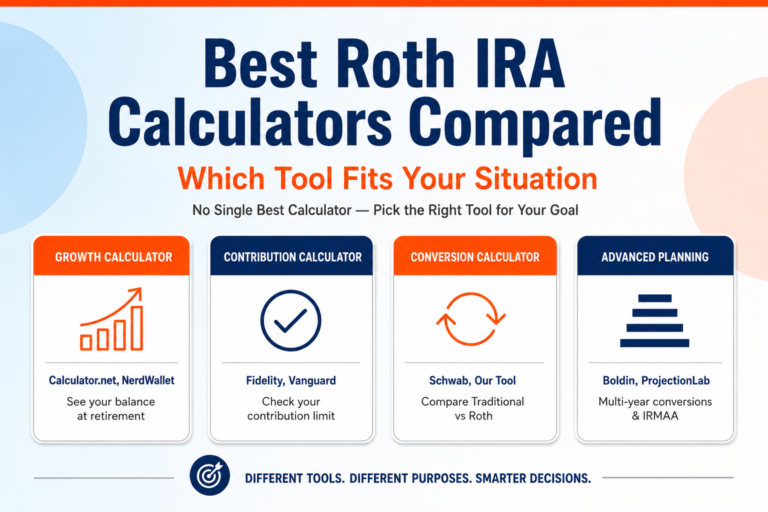
For the exact reduced amount if your income falls in between, use our Roth IRA contribution calculator.
Can Anyone Contribute to a Traditional IRA?
Yes. Unlike a Roth IRA, there’s no income limit on who can contribute to a Traditional IRA. Anyone with earned income can put money in, regardless of how much they make. Income only affects whether you can deduct that contribution on your taxes, not whether you’re allowed to make it.
Is a Traditional IRA Contribution Tax-Deductible?
It depends on two things: whether you (or your spouse) have access to a retirement plan at work, and your income. If neither of you is covered by a workplace plan, your Traditional IRA contribution is fully deductible, no matter your income.
If you are covered by a workplace plan, the deduction phases out at these 2026 income levels: Filing Status Full Deduction If MAGI Below No Deduction If MAGI At Or Above Single or head of household $81,000 $91,000 Married filing jointly (contributing spouse covered) $129,000 $149,000 Married filing jointly (spouse not covered, other spouse is) $242,000 $252,000
When Can You Withdraw Money Without a Penalty?
Roth IRA: You can withdraw your original contributions at any time, at any age, without tax or penalty. Withdrawing earnings early is a different story; those are only tax- and penalty-free once your account is at least 5 years old and you’re 59½ or older, unless an exception applies (such as a first-time home purchase, disability, or certain education and medical expenses).
Traditional IRA: any withdrawal before age 59½ is generally taxed as income and hit with an additional 10% penalty, with a shorter list of exceptions than the Roth IRA. There’s no separate rule for contributions versus earnings, since the whole account is treated as pre-tax money.
Do Roth and Traditional IRAs Have Required Minimum Distributions?
Traditional IRAs do. You’re required to start withdrawing a minimum amount each year once you turn 73 (rising to 75 for people born in 1960 or later), whether you need the money or not. Roth IRAs don’t, at least not for the original owner. Your money can stay invested and grow tax-free for as long as you want during your lifetime. Beneficiaries who inherit a Roth IRA do have their own distribution rules to follow.
Can You Have Both a Roth IRA and a Traditional IRA?
Yes. You’re allowed to contribute to both in the same year, as long as your combined contributions across both accounts don’t exceed the annual limit. Some people intentionally split contributions between the two to get a mix of tax-now and tax-later savings, sometimes called tax diversification.
Roth IRA or Traditional IRA: Which Should You Choose?
The general rule of thumb comes down to one question: Do you expect to pay a higher tax rate now or in retirement?
Choose a Roth IRA if: you’re early in your career, currently in a lower tax bracket, or expect your income (and tax rate) to be higher later in life.
Choose a Traditional IRA if: you’re in your peak earning years now, want to lower your taxable income today, and expect to be in a lower tax bracket once you retire. If you’re not sure which way you’ll go, you can also split contributions between both.
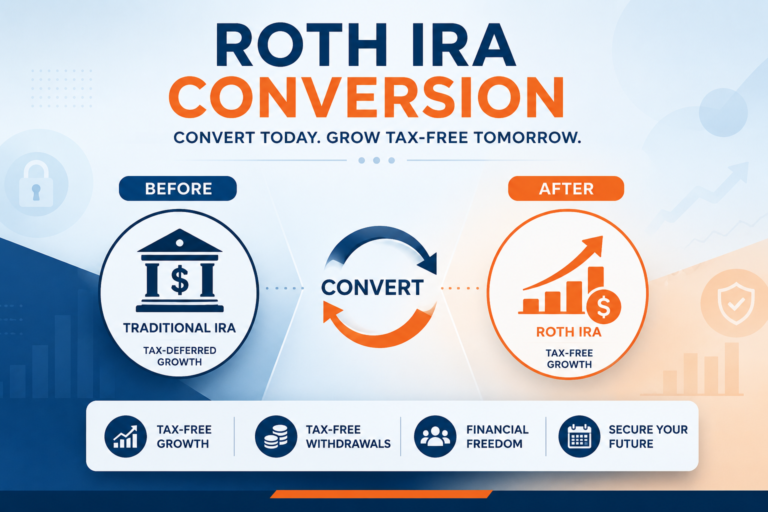
And if you already have a Traditional IRA and want to switch strategies later, our Roth IRA conversion calculator can show you what that would cost in taxes today versus what you’d save down the road.
What About a Roth 401(k) or Traditional 401(k)?
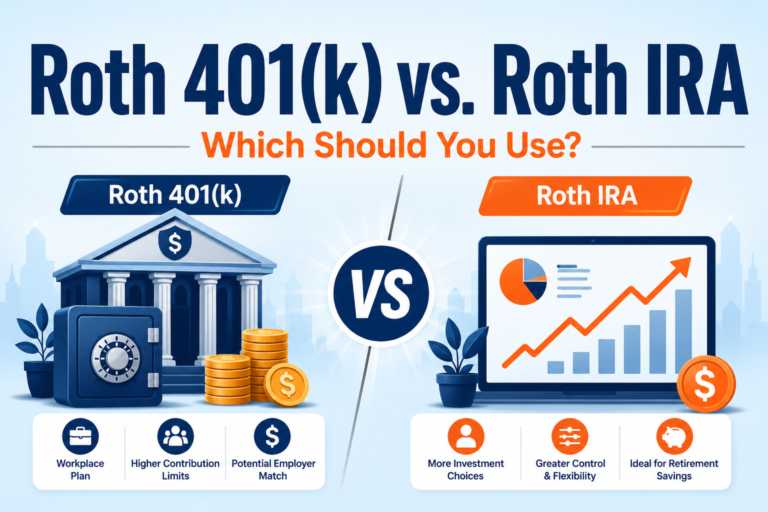
A 401(k) works through your employer rather than being something you open yourself, and it follows the same basic tax logic: a Roth 401(k) uses after-tax money for tax-free withdrawals later, while a Traditional 401(k) uses pre-tax money that’s taxed on withdrawal.
The key practical differences from an IRA are a much higher contribution limit and, in many cases, an employer match. You can contribute to a 401(k) and an IRA in the same year; they don’t share the same limit.
Frequently Asked Questions
Is a Roth IRA better than a Traditional IRA?
Neither is universally better. A Roth IRA tends to work out better if you expect to be in a higher tax bracket in retirement, while a Traditional IRA tends to work out better if you expect a lower tax bracket later. It depends on your own income and timeline.
Can I convert a Traditional IRA to a Roth IRA?
Yes. This is called a Roth conversion, and there’s no income limit on doing it, even if you earn too much to contribute to a Roth IRA directly. You’ll owe income tax on the converted amount in the year you convert.
Do I pay taxes twice if I contribute to a Traditional IRA?
No. If your contribution was tax-deductible, you’re only taxed once, when you withdraw the money in retirement. If you made a non-deductible contribution, only the earnings are taxed on withdrawal, not the original contribution.
Which IRA is better for young people?
A Roth IRA is often a strong fit for younger savers, since they’re typically in a lower tax bracket early in their career and have decades for tax-free growth to compound.
Can my income be too high for both types of IRA?
You can always contribute to a Traditional IRA regardless of income, though you may lose the tax deduction. Only Roth IRA contributions have a hard income cutoff.
What happens to my IRA if I change jobs?
Your IRA isn’t tied to an employer, so nothing happens to it when you change jobs. If you also have an old 401(k) from a previous employer, you can typically roll it into either type of IRA.
Conclusion
There’s no single right answer between a Roth and a Traditional IRA; it depends on your income now versus what you expect later. Use the calculator above with your own numbers to see which one comes out ahead, or check our Roth IRA calculator to see how your savings could grow either way.